What to do if your NCOER is missing from your official record
A missing Noncommissioned Officer Evaluation Report (NCOER) can affect your personnel file, promotion eligibility, assignment opportunities, and the accuracy of your service history. The report may have been completed by the rating chain but never fully processed, or it may be awaiting transfer to the Army Military Human Resource Record (AMHRR) in iPERMS.
Before requesting a correction, identify where the report disappeared. An NCOER can be missing from the Evaluation Entry System (EES), absent from iPERMS, delayed during quality control, or filed under an incorrect document category. Each situation requires a slightly different response.
Keep copies of the report, signature pages, routing emails, and any submission confirmation. These documents establish that the evaluation was prepared and help your S1 or human resources specialist locate the problem.
Check the report’s processing status
Start by contacting your unit S1, servicing military personnel office, or the HR professional who handles evaluation submissions. Ask them to verify whether the NCOER was submitted, rejected, returned for correction, or still waiting for a required signature.
If you have access to EES, review the evaluation’s status and routing history. A report may appear complete to the rated NCO while remaining unfinished because the rater, senior rater, or supplementary reviewer has not completed an action. The NCOER submission guide can also help clarify common submission steps and status issues.
Do not assume that a digitally signed report has already reached your official record. Completion in EES and filing in iPERMS are connected processes, but they are not always instantaneous. Request the transaction or submission details from the office responsible for processing the evaluation.
Determine whether iPERMS is the problem
If the NCOER is complete in EES but absent from iPERMS, the issue may involve transfer, indexing, document classification, or a processing backlog. Sign in to iPERMS and search carefully through the performance, evaluation, and service document sections. Use the report date and evaluation type rather than relying only on the visible document title.
Check whether the report was uploaded under the wrong category or associated with an incorrect period. A document can be present but difficult to find when metadata is inaccurate. Save a screenshot of the search results and record the date you checked the system.
If the report is missing after a reasonable processing period, ask the S1 to confirm whether it was sent to the appropriate records system. The office may need to resubmit the document, correct its classification, or open a records support request. Keep the request professional and specific so the staff can identify the exact evaluation.
Gather evidence before requesting action
Prepare a small document packet before escalating the issue. Include the signed NCOER, the evaluation period dates, the names and ranks of the rating officials, submission receipts, email correspondence, and screenshots showing the missing record.
The report itself should be reviewed for obvious problems. Check the rated NCO’s name, rank, identifying information, duty position, rating chain, reason for submission, and signatures. An incorrect administrative field can cause a rejection or delay even when the performance content is complete.
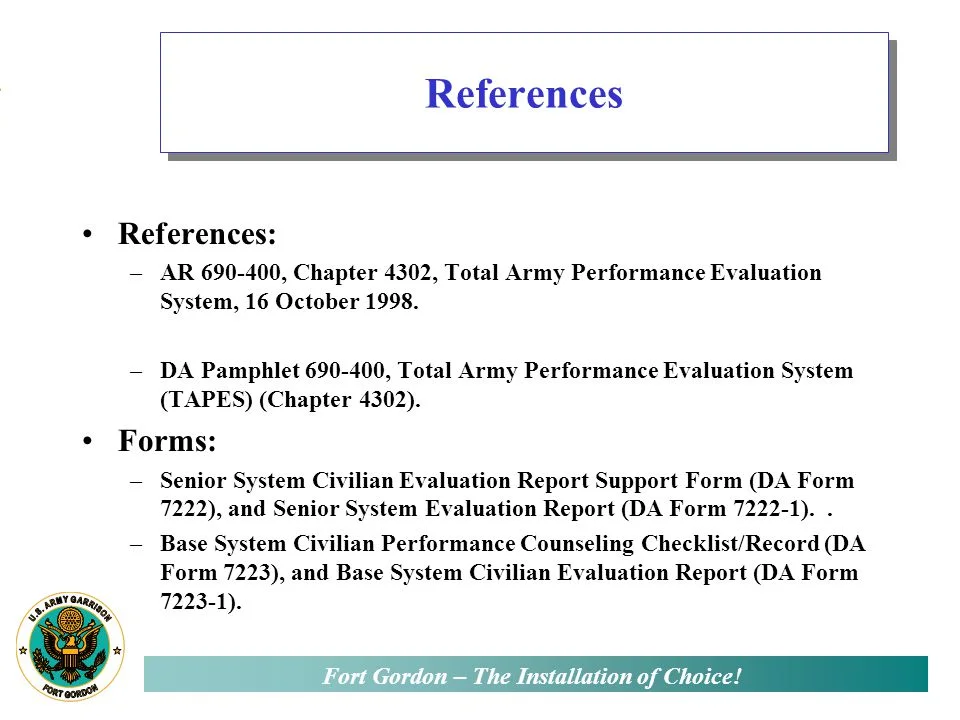
Use the performance evaluation guide to review the general structure and administrative expectations for Army evaluations. This is informational guidance rather than an official replacement for current Army regulations, local procedures, or instructions from your servicing personnel office.
Follow the correct escalation path
The first escalation should normally be through the unit S1 or designated administrative channel. Provide the evaluation and a concise explanation: when it was signed, where it was submitted, what system does not show it, and what assistance you are requesting.
If the unit cannot resolve the issue, contact the higher headquarters G1 or human resources command identified by your organization. Ask whether the report was rejected, held for correction, or transferred without proper indexing. Request a case number or written acknowledgment when available.
For a report that is missing because of a rating-chain dispute, improper processing, or alleged administrative error, seek guidance from the appropriate career counselor, inspector general, legal assistance office, or command channel. These offices serve different purposes, so describe the issue accurately rather than presenting a routine filing delay as an appeal.
Compare the possible record locations
Different systems may show different stages of the same evaluation. Confirming the location helps prevent duplicate submissions and reduces the risk of creating conflicting versions of the report.
| Where you check |
What it may mean |
Recommended next step |
| EES routing history |
The report is pending, rejected, or incomplete |
Ask the responsible official to identify and resolve the pending action |
| Unit S1 or HR office |
The report was received locally or is awaiting processing |
Request submission confirmation and any rejection notice |
| iPERMS |
The report has been filed, misclassified, or not indexed |
Search by date and category, then request correction or re-upload |
| AMHRR record review |
The document may be present in the official record but difficult to locate |
Ask HR personnel to verify the correct section and document type |
| Rating chain email files |
Supporting evidence may exist even if the system record is absent |
Preserve messages and attachments for a formal records request |
The EES overview provides additional background on how evaluations move through the Army’s electronic evaluation process. Use that information to understand the workflow, then confirm the current procedure with your unit because local responsibilities and system instructions can change.
Protect promotion and assignment timelines
A missing NCOER can become more urgent when a promotion board, centralized selection list, retention action, or assignment screening is approaching. Tell the S1 about any known suspense date and ask whether the evaluation can be added to the board file through the authorized process.
Do not alter, recreate, or submit a different version of the NCOER simply because the original is missing. Duplicate reports can create additional administrative problems and may raise questions about which version is valid. Work from the signed version and let the responsible personnel office determine whether a resubmission is required.
If a board is imminent, keep proof that you attempted to correct the record before the deadline. Depending on the situation, the official board guidance may provide a method for submitting missing documents or requesting consideration of an unresolved records issue. Follow that guidance exactly.
Use a practical follow-up plan
A written follow-up makes the issue easier to track and gives each office the information it needs. Use a professional subject line, identify the evaluation period, attach only relevant documents, and avoid sending sensitive personal information to an unapproved address.
- Confirm the NCOER’s status in EES and iPERMS.
- Obtain a copy of the signed report and submission evidence.
- Ask the S1 or HR office for a specific corrective action.
- Record dates, points of contact, case numbers, and responses.
- Recheck the official record after the correction is processed.
Once the NCOER appears, download or retain a copy of the filed document and verify that the evaluation period, report type, and personal information are correct. A successful upload is not the final step if the record contains an indexing error.
Begin with your unit S1 or servicing HR professional, provide organized evidence, and escalate through the appropriate command or records channel when necessary. Prompt, documented follow-up gives your evaluation the best chance of reaching the official record before it affects a promotion, assignment, or career decision.