OER And NCOER Support Forms Explained
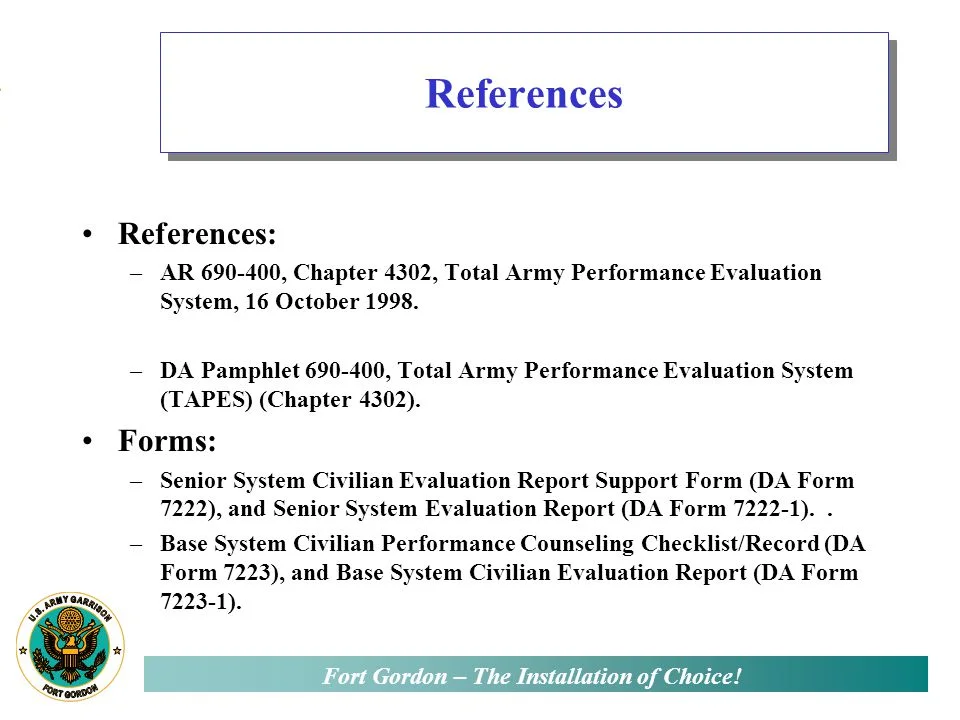
Army evaluation support forms help leaders and rated personnel establish clear expectations before a formal evaluation is written. They connect daily duties, leadership goals, and measurable results to the applicable evaluation system. A support form is therefore a planning and counseling document, rather than the completed evaluation report itself.
The key distinction is the population each form supports. Officers use the Officer Evaluation Report (OER) process, while noncommissioned officers use the Noncommissioned Officer Evaluation Report (NCOER) process. Although both forms encourage regular communication and documented performance, their language, responsibilities, and leadership frameworks are different.
Understanding these differences can make counseling sessions more productive and reduce confusion when preparing an evaluation record. It also helps Soldiers identify what belongs in a support form, what belongs in the final report, and which records should be retained for future administrative needs.
The Purpose Of An Evaluation Support Form
An evaluation support form creates a shared performance plan between the rated Soldier and the rater. It normally identifies assigned duties, key responsibilities, objectives, and expected results. The form gives both people a reference point for initial counseling, periodic counseling, and the final evaluation discussion.
The document should reflect the actual position, not generic wording copied from another assignment. Duties may change after a move, mission adjustment, or change in responsibility, so the support form should be reviewed and updated when appropriate. Specific expectations make later feedback more objective and useful.
A support form does not replace counseling. It gives counseling a structure by documenting what the Soldier is expected to accomplish and how performance will be observed. Leaders can then use examples, results, and development needs instead of relying on broad impressions.
How The OER Support Form Works
The OER Support Form, commonly associated with DA Form 67-10-1A, is used for officers. It helps the rater and rated officer establish duties, responsibilities, objectives, and developmental priorities during the rating period. The officer’s position and level of responsibility should guide the content.
Officer counseling often focuses on mission accomplishment, leadership influence, organizational stewardship, and preparation for increased responsibility. Objectives should describe outcomes that can be observed or assessed. For example, improving a process, preparing a team for a major operation, or developing subordinate leaders is more useful than simply stating “perform well.”
The support form also creates a basis for the officer’s self-assessment and later evaluation narrative. It does not determine a rating by itself, and it should not be treated as a promise of a particular performance evaluation. The final OER must reflect the full rating period and the rater’s independent assessment.
How The NCOER Support Form Works
The NCOER Support Form, generally associated with DA Form 2166-9-1A, serves noncommissioned officers. It supports counseling and performance planning by recording the NCO’s principal duties, responsibilities, goals, and expected contributions. The form should match the NCO’s grade, position, and actual scope of authority.
NCO counseling commonly addresses the Army Leadership Requirements Model, including attributes and competencies such as character, presence, intellect, leads, develops, and achieves. The form can translate those broad areas into practical expectations, such as training Soldiers, maintaining readiness, enforcing standards, managing resources, or improving team performance.
NCOs should maintain personal copies of counseling and evaluation-related documents according to unit procedures. When an earlier report is needed, guidance on obtaining a previous NCOER copy can help identify the appropriate records process. A support form itself is not the same as the finalized NCOER filed in the official personnel record.
Key Differences At A Glance
Both forms support professional development, but they are designed for different evaluation populations and use slightly different terminology. The OER support form reflects officer responsibilities and career development, while the NCOER support form emphasizes NCO leadership, training, standards, and accomplishments.
| Area |
OER Support Form |
NCOER Support Form |
| Primary user |
Commissioned and warrant officers, as applicable |
Noncommissioned officers |
| Common form |
DA Form 67-10-1A |
DA Form 2166-9-1A |
| Main purpose |
Establish officer duties, objectives, and developmental expectations |
Establish NCO duties, goals, responsibilities, and performance expectations |
| Counseling focus |
Leadership, mission results, organizational impact, and future potential |
Standards, Soldier development, readiness, leadership, and team results |
| Evaluation connection |
Supports the later OER |
Supports the later NCOER |
| Final rating authority |
Determined through the OER rating chain |
Determined through the NCOER rating chain |
| Record status |
Working and counseling document, subject to Army and unit procedures |
Working and counseling document, subject to Army and unit procedures |
The form should never be used to manufacture achievements after the fact. Its value comes from being completed early, discussed openly, and updated as duties or priorities change. The final report can include results that were not originally listed if they accurately represent the rating period and meet reporting standards.
Counseling And The Rating Chain
The rater is central to the support-form process because the rater normally establishes expectations and conducts counseling with the rated Soldier. The senior rater may provide guidance about broader responsibilities and potential, but the exact roles depend on the applicable evaluation regulation and rating chain.
Initial counseling should clarify the duty description, priorities, performance measures, and professional development goals. Follow-up counseling should review progress, identify barriers, and document meaningful feedback. A last-minute meeting before the evaluation is not an effective substitute for counseling throughout the rating period.
Rated personnel should bring evidence to counseling, including training results, readiness improvements, completed projects, awards, inspections, and examples of subordinate development. The evidence should show what happened, how the Soldier contributed, and what measurable effect resulted.
Common Errors To Avoid
One frequent mistake is confusing the support form with the final evaluation report. The support form helps shape expectations and counseling; it does not guarantee specific wording or a particular rating. Another error is using vague goals that cannot be measured, such as “be a better leader” or “support the unit.”
A form can also become inaccurate when the Soldier changes jobs but the original duties remain unchanged. Leaders should revise expectations when a reassignment, deployment, promotion, or mission shift changes the scope of work. Accurate duty descriptions make evaluation narratives easier to support.
Personnel should also avoid treating administrative systems as substitutes for leadership communication. iPERMS, evaluation tools, and personnel websites can help with records and status checks, but they do not replace required counseling or local command procedures. Promotion-related research should be kept separate from the evaluation form itself; Soldiers can review guidance on how to check promotion points when evaluating their broader personnel record.
Practical Ways To Use The Forms
The most useful support forms are specific, current, and connected to the unit mission. Soldiers and leaders can improve them by:
- Writing duties and objectives in plain language tied to the actual position
- Adding measurable indicators such as readiness rates, training completion, inspection results, or process improvements
- Reviewing the form during initial and periodic counseling instead of waiting for the evaluation deadline
- Recording both accomplishments and development needs with dates and supporting evidence
- Keeping personal records while following unit guidance for official document storage and submission
A strong support form should help a Soldier understand what success looks like before the rating period ends. It should also give the rater enough context to provide fair, specific feedback based on observed performance.
Use the appropriate OER or NCOER support form as a working leadership document: discuss it early, update it when responsibilities change, and connect every major goal to an observable result. For official requirements, always compare general guidance with the current Army regulation, form instructions, and command policy.