How to Use Your OER to Build a Civilian Resume
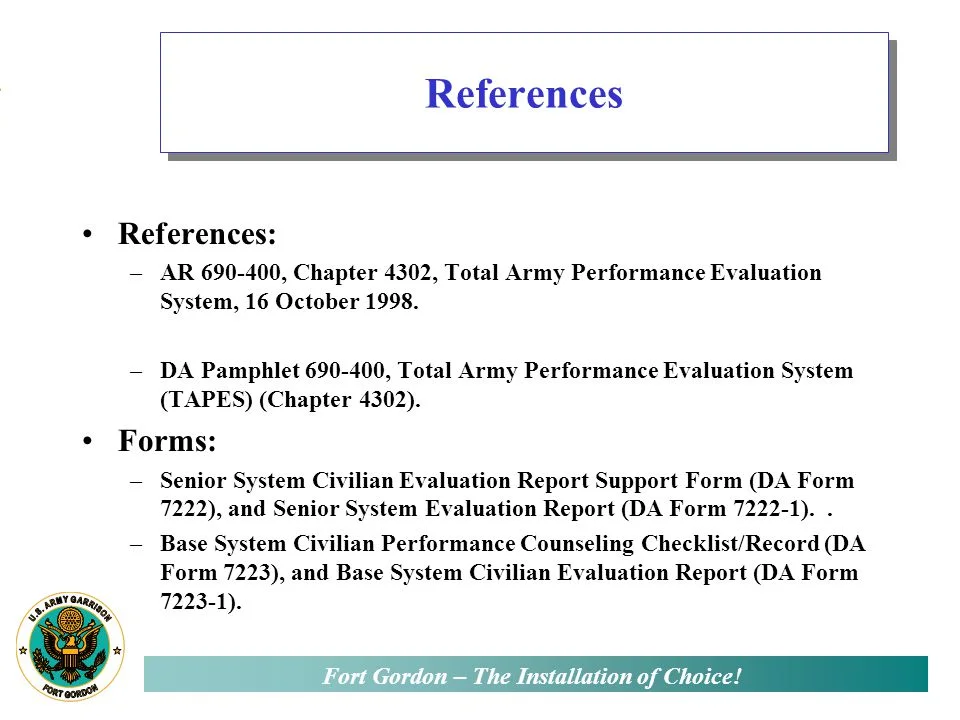
An Officer Evaluation Report (OER) contains detailed evidence about leadership, performance, responsibility, and professional growth. Although it is written for Army personnel decisions, the same information can help you present a strong civilian resume.
The key is translation. Civilian employers may not understand Army ranks, duty titles, evaluation categories, or unit terminology. Your resume should convert that experience into clear accomplishments that show what you did, how you did it, and what results you produced.
An OER should be treated as a source document rather than copied directly into a resume. Use it to identify measurable achievements, leadership examples, technical capabilities, and recurring strengths that match the jobs you want.
Start with the evidence in your OER
Review the rated officer comments, performance objectives, accomplishments, and senior rater narrative. Look for statements that describe scale, responsibility, initiative, judgment, team development, operational planning, resource management, or mission impact. These details often contain the strongest material for a professional resume.
Pay attention to numbers and scope. The size of a team, value of equipment, number of projects, operational tempo, geographic area, training audience, or improvement percentage can make an accomplishment more credible. If the OER does not provide a number, check official records and personal files for supporting details. General administrative references, including information available through EES Army resources, may help you understand related evaluation documentation.
Separate facts from military shorthand while reviewing the report. A phrase such as “excelled as a battalion S3” may be meaningful inside the Army, but a civilian hiring manager needs to know that you led operational planning, coordinated resources, managed deadlines, or advised senior leaders.
Translate Army language into business language
Begin with your duty title, then identify the civilian function behind it. An infantry officer may have experience in risk management, logistics, personnel leadership, emergency planning, or training operations. A signal officer may have worked in information technology, cybersecurity, communications infrastructure, or technical project management.
Avoid assuming that a civilian reader will recognize acronyms such as XO, S3, TOC, MDMP, or NCOIC. Spell out terms when they are relevant, and replace those that have little value outside the military. “Managed a 120-person organization” communicates more clearly than a sentence built around rank and unit designations.
Use a civilian job description as a translation guide. If the employer requests stakeholder engagement, project delivery, process improvement, or budget oversight, search your OER for examples that demonstrate those abilities. The wording does not need to match perfectly, but the underlying capability should be easy to identify.
Turn evaluation comments into accomplishment statements
A useful resume bullet generally follows a simple pattern: action, responsibility, method, and result. Start with a strong verb such as directed, coordinated, redesigned, implemented, advised, trained, evaluated, or improved. Then explain the work and connect it to a measurable outcome.
For example, an OER statement about improving staff coordination could become: “Directed cross-functional planning for 18 operational exercises, reducing decision delays by 30% and improving delivery of mission requirements.” This version retains the leadership evidence while making the result understandable to a civilian employer.
Do not copy praise such as “promote ahead of peers” or “best officer in the brigade” as a standalone claim. Those comments can guide your selection of examples, but employers respond better to verifiable achievements. Use recognition as supporting context after describing the work that earned it.
Match your OER evidence to the target role
One resume cannot present every part of a military career with equal emphasis. Select the OER accomplishments that relate most closely to the position. A project management resume might emphasize schedules, resources, risk controls, and cross-functional teams, while a human resources resume could focus on coaching, workforce planning, policy implementation, and organizational development.
The following translation examples can help convert common Army experience into civilian resume language:
| Army experience |
Civilian resume focus |
Example phrasing |
| Company or battalion command |
People leadership and operations |
Led a 150-person organization while managing readiness, training, and daily operations |
| Staff planning role |
Program management and analysis |
Coordinated multi-team planning and delivered time-sensitive recommendations to senior decision-makers |
| Training management |
Learning and development |
Designed and delivered training programs that improved proficiency across a 200-person workforce |
| Logistics responsibility |
Supply chain and resource control |
Managed equipment, transportation, and inventory processes supporting continuous operations |
| Counseling and development |
Coaching and talent development |
Mentored team members through performance goals, professional development, and career planning |
| Inspection or assessment duties |
Compliance and quality assurance |
Conducted structured reviews, identified process gaps, and implemented corrective actions |
Use the Army PPW login guide when you need to review promotion-related records or understand how documented achievements may fit into your broader military career history. Those records are not a substitute for an OER, but they can help you locate dates, responsibilities, certifications, and accomplishments that support accurate resume writing.
Protect sensitive information and preserve credibility
An OER may reference classified activities, operational locations, personal data, unit identifiers, or sensitive mission details. Do not place classified or controlled information on a resume, portfolio, public profile, or job application. Describe the capability and outcome at an unclassified level instead.
For example, replace a specific mission description with “planned and executed complex operations in a high-tempo environment.” You can still communicate judgment, coordination, and leadership without revealing protected information. When in doubt, ask an appropriate security or personnel office for guidance before publishing details.
Accuracy also matters when converting military achievements into civilian terms. Do not inflate team results into personal accomplishments or claim authority you did not hold. Clarify whether you led, supported, advised, supervised, or contributed to an effort. Precise language builds trust and makes your experience easier to discuss during an interview.
Build a focused evidence bank
Before drafting the final resume, create a private evidence bank from several OERs and supporting records. Organize entries by capability instead of by report date. Useful categories include leadership, operations, technical skills, communication, planning, training, process improvement, and resource management.
Record the original Army wording, the civilian translation, the measurable result, and the source document. This approach allows you to customize future resumes without repeatedly searching through old evaluations. It also helps you identify patterns, such as repeated praise for developing teams or solving complex operational problems.
Use these checks when selecting material:
- Choose achievements that support the requirements of the target job.
- Add scale, scope, speed, cost, quality, or outcome whenever the information is accurate.
- Replace acronyms and unit-specific language with recognizable civilian terms.
- Use varied action verbs and avoid repeating “managed” in every bullet.
- Keep sensitive, classified, and personally identifiable information out of public documents.
Your final resume should usually emphasize recent and relevant achievements rather than reproduce every duty from every assignment. Older military experience can remain valuable, especially when it demonstrates leadership or specialized expertise, but it should receive less space when newer civilian experience better matches the position.
Use the OER as a foundation for a targeted professional story. Select evidence, translate the language, verify the numbers, and revise each version for the employer’s needs. Start with one strong evaluation report, turn its clearest achievements into civilian accomplishments, and build the rest of your resume around that evidence.