Using iPERMS to manage military education transcripts
iPERMS gives eligible U.S. military personnel a central place to review education completed through military schools, civilian institutions and approved training. The records can support evaluations, promotion review and credential checks, but an iPERMS transcript is not automatically recognised by Australian employers or education providers.
Australian Army personnel normally maintain their training records through Australian Defence systems, while veterans, Defence members or civilians who have interacted with the U.S. military may need iPERMS. Before uploading anything, confirm which country issued each qualification and whether iPERMS is intended to hold it.
Know what the system contains
iPERMS—the Individual Personnel Electronic Military Personnel System—holds entries covering military education, civilian degrees, licences, certifications, apprenticeships and CCAF credit. It is a personnel record rather than a replacement for an official academic transcript. An Australian qualification recorded against the Australian Qualifications Framework is not automatically treated as a U.S. degree and may require a separate credential evaluation.
Your wider military file may also be held elsewhere. The site's guidance on free military records checks explains common routes for obtaining historical military records, including separation documentation. Australian handling standards, including the Privacy Act 1988 and Australian Privacy Principles, do not make iPERMS an Australian privacy scheme; access and correction still follow U.S. military procedures.
Sign in and open the education record
Access iPERMS through the authorised sign-in route using credentials assigned for your status. Availability varies for serving members, former members and civilian employees, so follow official help-desk instructions rather than sharing a password or sending identity documents through ordinary email. If your account works but records are absent, request role or record-access assistance.
Open the education or transcript area, select your record and use any available filters for military or civilian education. The transcript function can provide a consolidated view, while individual course pages usually show more detail and evaluation status. Australian administrators working with a U.S. training office should allow for the time difference when checking notices or following up a request.
Verify the transcript line by line
Compare every course with its source document: institution, dates, title, credit or contact hours, grade and completion status. Check spelling carefully because a TAFE award in Melbourne or a university qualification in Brisbane may use a different name from the awarding body. A digital qualification statement or certified transcript is stronger evidence than a screenshot from a student portal.
Attention also matters when a credential has been updated. Look for superseded entries, duplicate attempts and courses awaiting evaluation. A record showing attendance is not proof of a completed award, while an evaluated course can support CCAF and, where applicable, promotion points. Gaps can affect life outside military administration too. People moving from foster or other institutional care can face overlapping housing, identity and employment-document barriers, making transition support resources a useful adjacent reference when records are incomplete.
Correct missing or disputed entries
When an expected item is missing, determine whether it was never reported, sent without the correct service identifier or rejected by the approving office. File a missing document request through iPERMS when the workflow is available, and attach a legible copy of the transcript, certificate, licence or internal course record. The practical steps for requesting a missing document can help before contacting a school.
Keep each correction tied to supporting evidence rather than relying on memory. For qualifications issued outside Australia, allow extra time for certified translations and any privacy review required by the receiving institution. Save the submission confirmation and follow the case through the official queue, particularly when an Australian university or registered training organisation must issue the authoritative document.
Connect transcripts with evaluations and promotion review
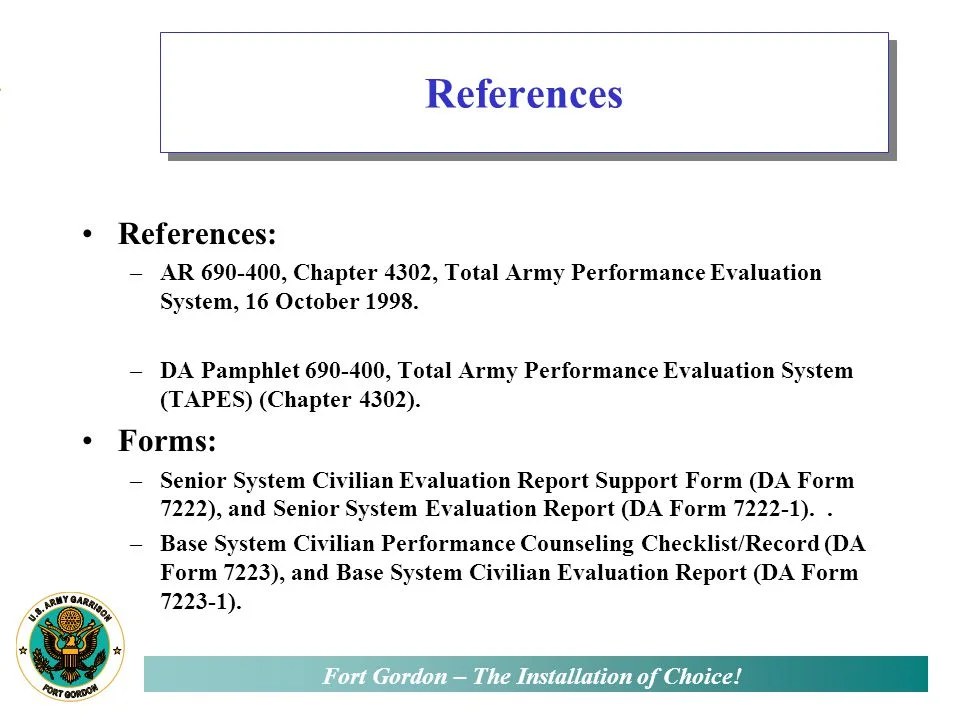
An accurate transcript makes evaluations faster because reviewers can verify civilian education and credentials relevant to promotion points, awards or professional development. Information in iPERMS does not change an evaluation automatically. The rater still documents performance and education in EES, and an evaluator must confirm what can be credited.
Before an evaluation, checking the assigned rater and the information in their profile can reveal questions before submission. This guide to view a rater profile explains where that information appears in EES. For Australian credentials, provide the qualification level, issuing institution and any recognition assessment so reviewers can distinguish a completed award from planned study. The education record remains separate from the DD-214 and performance reports.
Maintain a dependable update routine
Make transcript maintenance part of course completion rather than an annual clean-up. After finishing a military school or external programme, request the official document promptly, confirm the iPERMS entry and note any evaluation still pending. Repeat the check before a promotion board, deployment, job-qualification review or application to an Australian employer.
A practical routine for Australian-based personnel is:
- Keep one secure folder for official transcripts and qualification statements.
- Record the issuing institution, completion date and credential level.
- Compare iPERMS entries after each course or licence renewal.
- Use the missing-document workflow for incomplete or rejected entries.
- Save submission confirmations and correction correspondence.
- Recheck the transcript before boards, deployments and civilian applications.
Treating the transcript as a living service record keeps corrections ahead of deadlines and makes verified information available when an evaluator, employer or education provider asks for it.