How to Request a Military ID Card for a Dependent
A military dependent identification card confirms eligibility for certain benefits and services connected to a qualifying sponsor. Spouses, children, and other eligible family members may need the card to access installation facilities, medical care, commissary and exchange privileges, and other programs.
The process usually begins with the service member or retiree updating the dependent’s information in the Defense Enrollment Eligibility Reporting System, commonly called DEERS. After eligibility is established, the family member can visit a Real-Time Automated Personnel Identification System, or RAPIDS, site for card issuance.
Requirements can differ by relationship, age, sponsor status, and location. Preparing the correct records before the appointment helps prevent delays and avoids an unnecessary second visit.
Who qualifies for a dependent ID
Eligible dependents commonly include a lawful spouse, biological or adopted children, stepchildren, and certain incapacitated adult children. In some circumstances, parents or other family members may qualify when they meet dependency requirements established by the Department of Defense.
A child’s eligibility often changes at age 21. It may continue to age 23 when the child is enrolled in an approved full-time course of study and remains dependent on the sponsor. An incapacitated dependent may qualify beyond the usual age limits if the required medical and dependency determinations are completed.
The sponsor’s status also matters. Active-duty service members, members of the Selected Reserve, retirees, and some surviving family members may have different eligibility rules. A local military personnel office can explain the applicable category when the situation is unusual.
Start with DEERS enrollment
The sponsor generally must add the dependent to DEERS before an identification card can be issued. This may be completed through a personnel office, a service-specific administrative office, or another authorized military ID facility. A dependent who is not correctly listed in DEERS will usually be unable to receive a card, even when the family has supporting documents.
For a spouse, the sponsor typically provides a marriage certificate and the dependent’s Social Security number or other accepted identifying information. For a child, the office may request a birth certificate, adoption decree, or placement documentation. Foreign records may require an English translation or additional authentication.
After DEERS enrollment, schedule an appointment at a RAPIDS site through the official ID Card Office Online system or follow the installation’s local procedure. Some locations accept walk-ins, but appointments are generally more reliable, especially during permanent change-of-station periods.
Gather the required documents
The sponsor and dependent should bring original documents or certified copies whenever possible. Offices may have specific rules about acceptable identification, so reviewing the appointment instructions in advance is important. The sponsor may also need to complete or approve DD Form 1172-2, Application for Identification Card/DEERS Enrollment.
A dependent who attends without the sponsor may need a valid power of attorney or another authorized form of sponsor verification. The exact requirement depends on the installation and the sponsor’s availability. When a sponsor is deployed, stationed overseas, or otherwise unavailable, the issuing office can explain remote verification options.
Common items include:
- Marriage, birth, adoption, or dependency documents
- Social Security card or official tax identification record
- A current government-issued photo ID for the dependent
- The sponsor’s military ID or identifying information
- A completed DD Form 1172-2 when required
- Supporting school or medical documents for age-based exceptions
The office will review the records, verify the dependent in DEERS, and capture the necessary photograph and biometric information. Children may have different fingerprint or signature requirements based on age and local procedures.
| Situation |
Documents commonly requested |
Key point |
| Spouse |
Marriage certificate, Social Security record, photo ID |
Sponsor must establish the relationship in DEERS |
| Child under the normal age limit |
Birth or adoption record, Social Security record |
Parentage or legal custody must be documented |
| Student dependent |
School enrollment verification and existing dependent records |
Eligibility may continue beyond age 21 |
| Incapacitated adult child |
Medical and dependency determinations |
Additional approval may be required |
| Dependent without the sponsor present |
Valid power of attorney or authorized verification |
Confirm requirements with the issuing facility |
Choose the right appointment path
Most dependents receive a Uniformed Services Identification and Privilege Card, commonly associated with DD Form 1173. The card is different from a Common Access Card, which is issued to eligible personnel for military network and identity functions. Dependents generally do not receive a CAC unless they independently qualify for one.
A RAPIDS site may issue a new card, replace a damaged or lost card, update personal information, or renew an expiring credential. Bring the current card when replacing it, if available. For a lost or stolen card, report the loss promptly and ask the issuing office whether a police report or sponsor statement is required.
The card may be used as proof of eligibility, but it does not replace every document needed for a benefit. For example, medical enrollment and eligibility questions may involve DEERS, TRICARE, and the appropriate regional contractor. A guide on using ID for TRICARE can help explain how the credential fits into healthcare access.
Complete issuance and check the card
At the appointment, personnel verify the dependent’s identity, confirm eligibility, and issue the current card format available at that facility. The dependent should review the printed name, date of birth, expiration date, and sponsor information before leaving. Errors should be reported immediately so they can be corrected while the record and appointment are still active.
Some cards have expiration dates tied to the sponsor’s service status or the dependent’s eligibility period. A student dependent may need to provide updated enrollment proof. A spouse may need a new card after a name change, divorce, or other change in eligibility. Delaying updates can create problems at medical facilities, gates, and benefit offices.
Keep the card secure and avoid lending it to another person. It contains personal information and serves as an access credential. If it is lost, contact the nearest ID card facility and follow local instructions for replacement.
Maintain eligibility after issuance
A dependent ID card remains useful only when the underlying DEERS record is accurate. Report marriage, divorce, adoption, birth, death, address changes, name changes, and changes in school attendance through the appropriate military personnel office. Some updates require documents before the record can be changed.
Retirees and surviving family members should pay close attention to card rules because eligibility and card types can change when the sponsor leaves active duty. The retiree ID guidance provides related information for families navigating that transition.
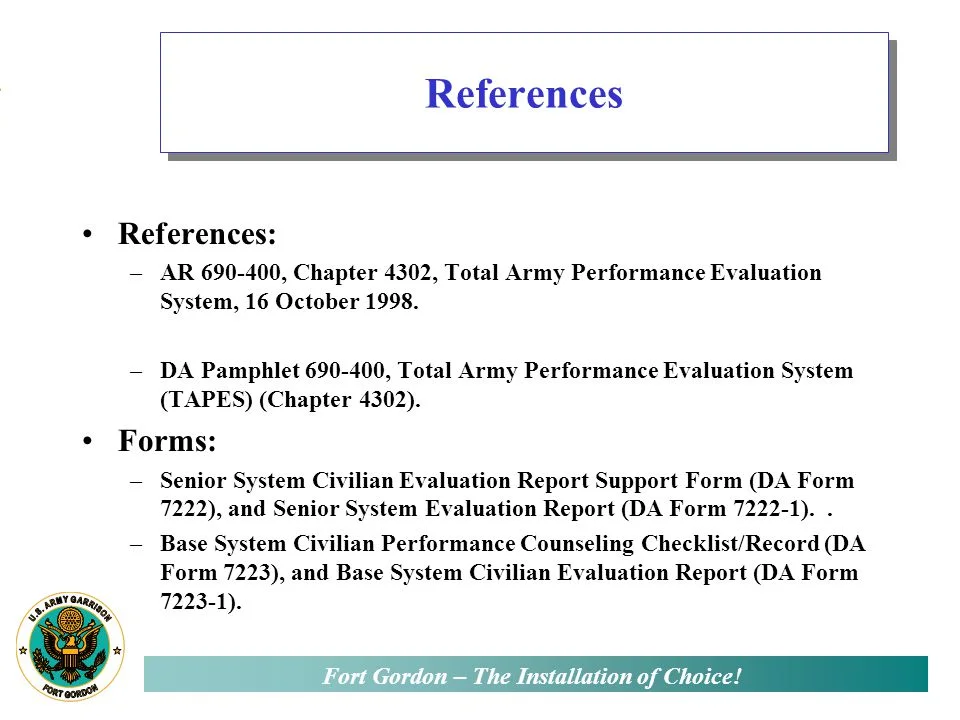
Administrative records also matter across a service member’s career. Although evaluation documents do not replace identity records, personnel who manage broader Army administrative requirements may find the Army evaluation system relevant to maintaining organized service records.
Use the official RAPIDS locator and installation instructions to schedule the appointment, confirm document requirements, and complete the dependent’s DEERS enrollment before visiting. Bringing complete records and checking every detail on the issued card can make the process faster and protect continued access to authorized military benefits.