Handling a Rater Change Mid-Cycle for an NCOER
A rater change during an evaluation period can create uncertainty about who prepares the NCOER, which duties belong in the report, and how the rating chain should document the transition. The key is to treat the change as a formal personnel action rather than an informal handoff.
The departing rater and the incoming rater should coordinate early, preserve relevant counseling records, and confirm the correct evaluation dates. A clean transition protects the rated NCO from gaps in documentation and helps the senior rater evaluate performance across the full period.
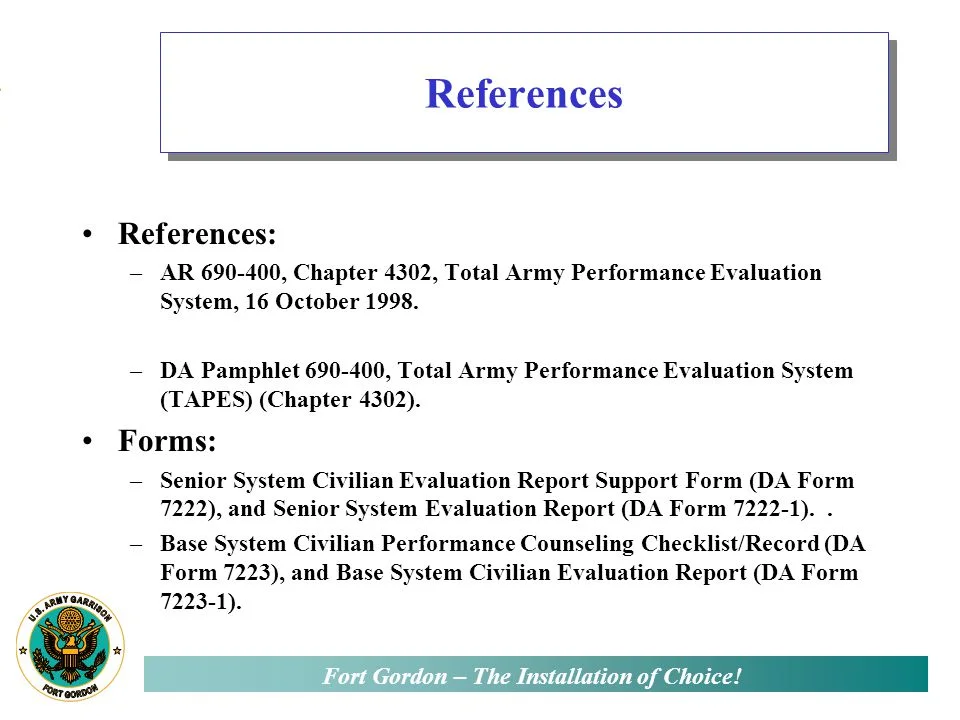
Army evaluation procedures can change as regulations and administrative guidance are updated. Use the current AR 623-3, applicable Department of the Army forms, and local S-1 instructions as controlling references. The Army performance evaluation guide can also help explain the broader NCOER process in plain language.
Why The Rater Change Matters
The rater is responsible for observing performance, conducting counseling, assessing leadership attributes, and preparing the applicable portions of the NCOER. When that person leaves the position, changes duty assignments, or no longer directly supervises the NCO, the evaluation record must reflect the change accurately.
A mid-cycle transition may require a change-of-rater evaluation, an annual report that includes multiple raters, or another report type authorized by current policy. The correct option depends on the reason for the change, the amount of qualifying supervision, the rated NCO’s status, and the applicable reporting rules.
The incoming rater should not assume responsibility for undocumented events. The departing rater’s observations, counseling notes, performance objectives, and known achievements should be transferred through the rating chain while preserving the integrity of the evaluation.
Verify The Report Type And Timeline
Start by identifying the effective date of the rater change. This date should reflect when the previous rater stopped exercising the required supervision, not simply the date a memorandum was signed or a replacement arrived at the unit.
Next, ask the S-1 or servicing administrative office to verify whether the situation requires a change-of-rater NCOER, an annual NCOER with a change of rater, or another authorized evaluation. Do not create overlapping or missing rating periods by relying on assumptions.
The rating chain should also confirm the minimum time requirements for the rater and senior rater. If the previous rater did not supervise the NCO for the required period, the report may be handled differently. The current regulation and command guidance should control when the facts are unusual.
Build A Complete Continuity Record
A useful continuity packet includes the last counseling statement, duty description, performance objectives, award recommendations, major accomplishments, adverse information that must be addressed, and records of significant training or missions. The packet should support fair evaluation without becoming a collection of unsupported claims.
The departing rater should provide specific examples of results and leadership behavior. Statements such as “performed well” have limited value unless they explain what the NCO did, how the action affected the organization, and what standard or mission requirement was met.
The incoming rater should review the information with the rated NCO and establish expectations for the remainder of the cycle. This is a transition discussion, not an opportunity to rewrite the previous rater’s observations. Each rater remains accountable for the period personally observed.
| Action |
Primary Responsibility |
Timing |
Documentation |
| Confirm the rater-change date |
Rating chain and S-1 |
As soon as the change is known |
Duty assignment or personnel records |
| Review prior counseling and objectives |
Departing and incoming raters |
During the transition |
Counseling forms and continuity notes |
| Determine the required report type |
S-1 and rating officials |
Before drafting begins |
Current evaluation regulation and local guidance |
| Establish expectations for the remaining period |
Incoming rater |
Early in the new supervision period |
Written counseling and updated objectives |
| Conduct quality control |
Rater, senior rater, and rated NCO |
Before submission |
Draft NCOER and administrative checklist |
Coordinate The Rating Chain
The senior rater should be informed as soon as the rater change is known. The senior rater may need to determine how the report will cover performance under different raters, whether an intermediate assessment is needed, and how the rating chain will maintain consistency.
Communication should include the rated NCO, departing rater, incoming rater, senior rater, and administrative personnel when appropriate. A short written summary can identify the effective date, report type under consideration, counseling status, and unresolved administrative questions.
The incoming rater should avoid promising a particular evaluation profile or future rating. The purpose of the transition is to establish fair observation and documentation practices, not to predetermine the final assessment.
If disagreements arise, elevate them through the chain of command or the servicing human resources office. A rater change is not itself evidence of poor performance, and the transition should not be used to retaliate against the NCO or suppress legitimate accomplishments.
Draft And Review The NCOER
When the report is due, each rating official should provide an assessment based on the period and duties personally observed. The narrative should distinguish between direct knowledge, verified records, and information received from the previous rater.
The rated NCO should carefully review administrative data, duty title, organizational information, counseling dates, and the description of responsibilities. The NCO should also check whether significant accomplishments are represented accurately and whether the report improperly attributes one rater’s observations to another.
Administrative review is especially important when the evaluation moves through electronic systems. Confirm names, ranks, dates, signatures, duty positions, and submission status before the report is finalized. Retain copies of signed documents and supporting correspondence according to unit procedures.
Military personnel often handle several records actions at the same time. For example, a family member identification-card action follows a separate process, and this dependent ID card guide can help distinguish that task from evaluation-file requirements.
Protect The Official Record
After completion, verify that the final NCOER reaches the correct official record and that any rejected submission is corrected promptly. A report that remains in a draft, returned, or rejected status may not provide the same protection as a properly completed evaluation in the authorized personnel system.
Keep a private copy of the final report, counseling documents, and relevant communications. If the report contains an apparent error, raise it through the appropriate administrative or command channel instead of altering documents outside the authorized process.
- Record the exact date the previous rater stopped supervising.
- Confirm the report type and qualifying periods with the S-1.
- Transfer counseling records and measurable performance evidence.
- Give the incoming rater clear objectives for the remaining cycle.
- Review the final NCOER for accuracy before submission and filing.
A well-managed transition gives every rating official a defined period of responsibility and gives the NCO a fair opportunity to demonstrate continued performance. Begin the coordination as soon as the personnel change is known, use current Army policy as the authority, and keep a complete record from the first notification through final filing.