How to appeal a promotion points deduction for a non-rated period
A deduction entered against promotion points for a non-rated period can affect a soldier’s promotion standing and board consideration. The appropriate response is to verify the underlying record before disputing the number. An iPERMS error, an incorrectly coded evaluation period and a valid deduction based on an evaluation are different issues, and each requires different evidence.
For Australian readers, the governing system matters. The Australian Defence Force does not administer U.S. Army EES or iPERMS points. Army formations in Brisbane, Melbourne and Sydney use Australian personnel rules, while defence employers recruit locally through SEEK and often rely on Outlook and Teams. Those familiar tools may hold supporting documents, but they cannot alter a U.S. Army record.
Under Australian law, the Privacy Act 1988 and Australian Privacy Principles may govern an Australian contractor holding local copies. They do not make an Australian body the reviewer of a U.S. Army entry. A person in Australia should therefore use the U.S. Army chain of command, preserve the source records, and seek local legal advice only where permitted.
A persuasive appeal identifies the disputed entry, explains why it conflicts with the governing directive or source document, supplies proof and requests a defined correction. It avoids arguments based only on effort or workplace fairness. Current command instructions and the applicable directive determine the exact remedy and deadline.
Confirm what the record actually says
Begin in iPERMS rather than from memory. Open the promotion points record for the relevant cycle and note every deduction, its effective date and the source evaluation. Preserve a dated PDF or screenshot showing the complete entry; a cropped image can hide the category that explains it. Reserve component personnel can consult the site’s reserve iPERMS access guide before escalating access problems.
Next, compare the on-screen history with the non-rated designation in the evaluation record and with orders, memoranda or messages that changed the soldier’s status. Determine whether the issue is a coding error, an attachment to the wrong period, or a deduction deliberately entered by an authorised official. If access is missing, raise an account ticket with the appropriate help desk and retain the reference number.
Separate the non-rated finding from the deduction
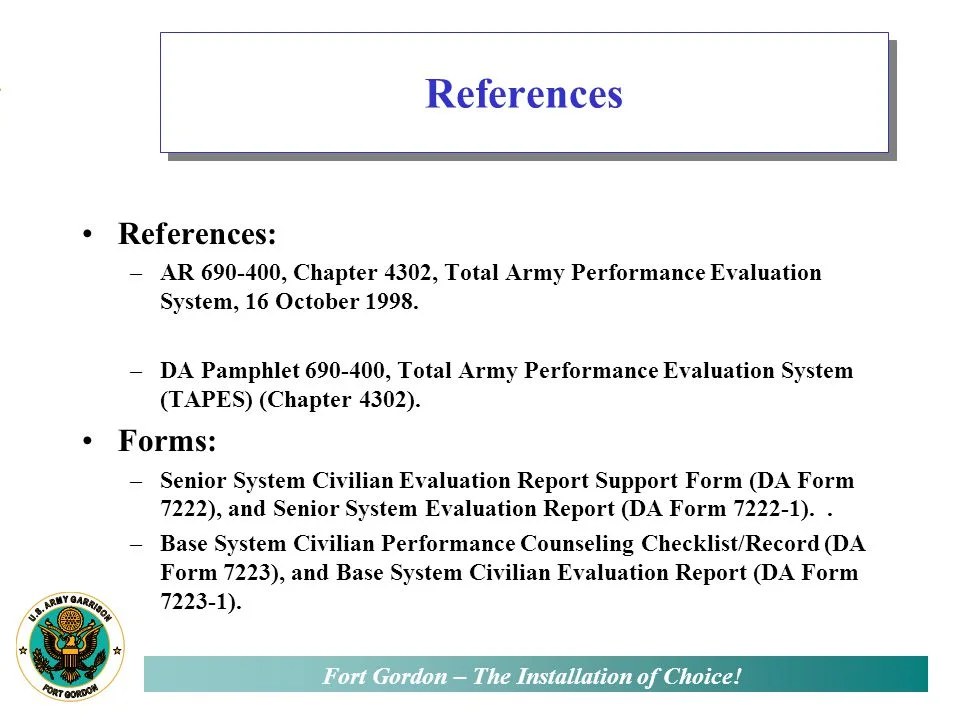
A non-rated period generally means the member was not required to receive the applicable evaluation or did not meet the criteria for one. That status alone does not prove a points deduction is wrong. The appeal must connect the disputed number to a specific policy basis and explain why the official record is inaccurate. The same workflow applies to an NCOER, OER or AER.
Separate two possible failures. The first is classification: the member should have been rated, or the non-rated code or period is wrong. The second is calculation: the soldier was properly non-rated, but points were added, carried forward or removed without the required authority. A request can address both issues, provided it identifies them separately.
Ask the reviewing official which source supports the deduction. If no source can be identified, challenge the entry as unsupported. If one exists, compare the amount and effective date with the worksheet and governing directive. The requested outcome might be corrected status, a recalculated total, removal of an unauthorised entry, or confirmation that no change is warranted.
Assemble evidence for the decision
Build the request as a concise administrative record so the decision maker can locate each point quickly.
Records to gather
- The relevant iPERMS promotion points worksheet and complete evaluation history.
- Applicable evaluation forms, such as DA Form 2162, 4187 or 4151, including every page.
- Orders, position or organisation documents, rosters, accessions and status changes.
- Written approvals, board actions or command messages supporting the disputed entry.
Context to include
- The disputed code, amount, date, soldier’s name, service identifier and evaluation period.
- The directive or local instruction used to determine the non-rated status.
- A numbered explanation of why each supporting record conflicts with the entry.
- A precise request to correct, recalculate or remove the promotion points deduction.
State the requested outcome in the final paragraph and enclose only the records needed for review. Confidential personnel data should travel through authorised Army channels rather than personal email, chat groups or unapproved cloud services. If an Australian contractor holds originals, clarify who must certify them before they enter the U.S. Army review process.
Submit the request through the proper authority
Route the package through the authority identified in the local non-rated, promotion points or adverse-action instruction. Depending on the issue, this may be the unit personnel section, commander, military personnel assignment representative, assignment representative, board or appeal official. A request lodged only with the rater may document the concern without starting the formal review.
The site’s Army PPW login reference can help locate the approved access path, but authenticate only through a verified government portal. Never share credentials with recruiters, colleagues or support forums. Include an acknowledgement or case number, an inventory of enclosed documents and the deadline stated in the governing instruction. There is no single universal appeal period, so a local suspense date cannot safely replace the written deadline.
Australian and U.S. offices operate across different calendars and time zones. Include dates and time zones on requests, retain transmission confirmations and follow up through official channels. If the first decision leaves an unresolved or unexplained point, submit the stated further appeal or review before its deadline and identify the problem by record and effective date.
Compare the issues and preserve the outcome
The two aspects of the appeal can be reduced to a direct comparison:
| Question |
Non-rated classification |
Promotion points deduction |
| Core issue |
Whether the soldier was properly excluded from evaluation |
Whether the subtraction had a valid source, amount and authority |
| Best evidence |
Evaluation status, orders, position documents and directive criteria |
Worksheet, source evaluation, approvals and audit trail |
| Possible correction |
Change the period or status and issue the required evaluation |
Remove, recalculate or document the deduction |
| If no error is found |
Explain the lawful basis and close the classification issue |
Show the authorised calculation and close the points issue |
A complete file preserves the original evidence, submitted request, acknowledgements and final decision. Store it with the service record or another approved location according to command guidance. Whether the result restores points, confirms the non-rated period or explains a valid deduction, the written outcome should match the iPERMS record. This prevents the same unsupported entry from being carried into a later promotion board.