How to Appeal a Negative OER Comment Through the Army Grievance Process
A negative Officer Evaluation Report comment can affect assignments, promotion opportunities and professional reputation. An appeal is most effective when it focuses on inaccurate facts, procedural errors, bias or an evaluation that is unsupported by the officer’s documented performance.
The U.S. Army evaluation system separates administrative errors from substantive disagreements. A misspelled name or incorrect duty title may be corrected through an administrative process, while a disputed assessment of leadership, potential or performance usually requires stronger evidence and a formal review.
Army personnel serving in Australia may face extra practical issues, including time-zone differences between Sydney, Brisbane or Perth and U.S. headquarters. Secure access to Army systems, certified copies and reliable document transmission can also be less convenient during a posting outside the United States.
This guide explains the general grievance and evaluation appeal pathways. It is informational rather than official legal advice, so the current version of AR 623-3, local command guidance and advice from a qualified military legal or personnel office should control.
Identify the type of OER problem
Begin by reading the entire OER, including the support form, counselling records, rater comments and senior rater narrative. A comment may be unpleasant without being appealable. The strongest cases show that the report contains a factual error, violates an evaluation requirement or was prepared through an improper process.
An administrative appeal may address incorrect dates, duty positions, identification data, rating officials or missing sections. A substantive appeal challenges the fairness or accuracy of the performance assessment. The distinction matters because the Army generally requires more than the officer’s disagreement with a rater’s professional judgement.
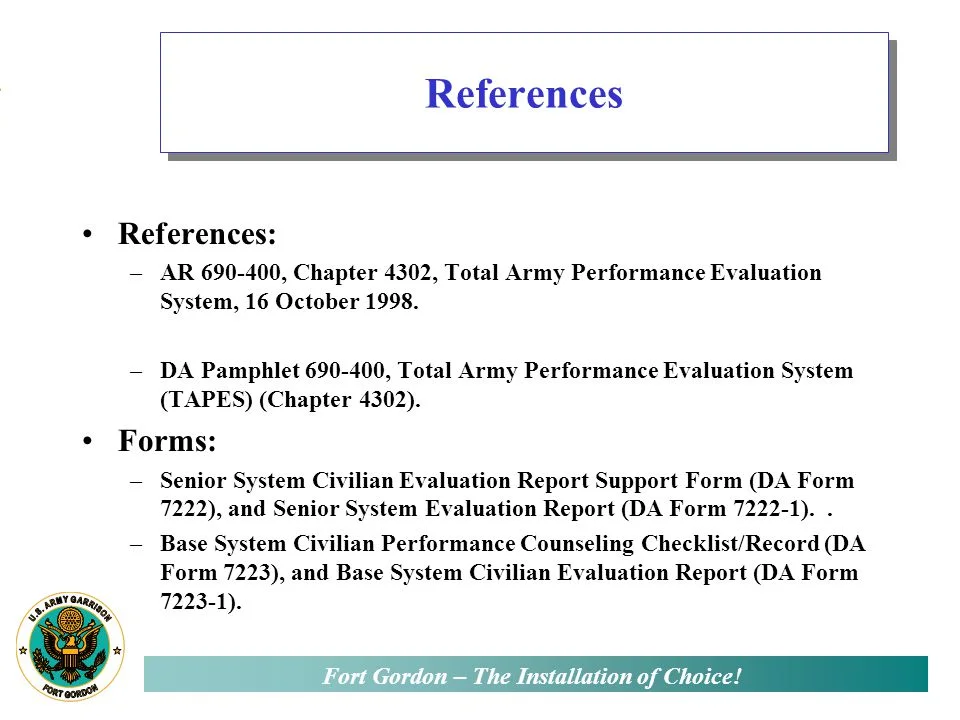
The governing regulation is AR 623-3, Evaluation Reporting System. Personnel should check the current edition and any implementing guidance before submitting documents, since timelines and submission procedures can change.
Use the local resolution pathway first
The first practical step is usually to raise the issue with the rating chain. Explain the disputed language calmly, identify the evidence and ask whether a correction, clarification or commander’s inquiry is appropriate. Keep the discussion focused on the report rather than personal criticism of the rater.
A commander’s inquiry is designed to examine alleged errors, injustice or regulatory violations. It is not a replacement evaluation and does not guarantee that a rater will change an opinion. The request should normally move through the chain of command and be supported by a concise statement and relevant records.
If the concern involves the rater or senior rater themselves, document the conflict carefully. Guidance on changing evaluation officials may help explain why a change in the rating chain is a separate issue from appealing an already completed OER.
Build evidence rather than argument
An appeal should show why the report is inaccurate or unjust, not simply explain why the officer dislikes it. Match each disputed statement with objective material such as counselling records, award recommendations, mission results, official correspondence, duty rosters or contemporaneous medical and administrative documentation.
Witness statements can be useful when they address specific events. A general statement that the officer was “a great leader” has limited value. A statement identifying the date, task, outcome and direct knowledge of the event is more persuasive.
Evidence that can support an appeal
- The approved duty description and rating chain
- Counselling records or written performance objectives
- Emails, orders, awards or mission reports
- Documents showing a factual or date error
- Statements from people with direct knowledge
- Evidence of a procedural violation or reprisal
Documents should be labelled and arranged in the same order as the claims they support. An officer working from Australia should account for AEST, ACST or AWST when recording submission deadlines and preserve original electronic metadata where possible.
Prepare a focused written statement
A written appeal should identify the OER, the exact disputed language and the requested remedy. Use headings or page references so a reviewer can locate each issue quickly. Avoid excessive background, emotional accusations and arguments based solely on seniority.
For each point, explain the fact, provide the evidence and state why the issue matters under the evaluation regulation. If the requested remedy is removal, amendment or referral for reconsideration, say so clearly. The reviewer should not have to infer what outcome the officer wants.
The appeal packet should be complete before it is sent. Keep a secure copy of the signed OER, the appeal statement, supporting exhibits, correspondence and proof of delivery. Do not upload sensitive records to an ordinary commercial cloud account or send protected information through an unapproved personal email service.
Submit through the correct Army channel
After local review, a formal evaluation appeal may be sent through the designated Army process to the appropriate headquarters or Evaluation Appeals Branch. The correct route can depend on the report type, the officer’s status, the date of the report and whether the issue is administrative or substantive.
A personnel office, legal assistance attorney or Inspector General can help identify the proper channel. The Inspector General may examine allegations of wrongdoing or improper action, but an IG inquiry does not automatically replace the formal OER appeal process or change the report.
Army administrative guidance is collected in the U.S. Army information section, which can provide broader background on related personnel procedures. It should be used alongside current official Army sources rather than as a substitute for them.
Observe deadlines and preserve records
Time limits are important. A commander’s inquiry and a formal appeal may have different deadlines, and the clock may depend on when the officer received or discovered the report. Waiting until a promotion board is imminent can make the situation harder to resolve.
Create a dated timeline showing report preparation, counselling, referral, receipt, discussions with the chain of command and every submission. Save delivery receipts and responses. If a deadline is unclear, seek written guidance from the responsible personnel office before assuming that an informal conversation preserves the appeal.
Mistakes that can weaken an OER appeal
- Relying on personal disagreement without supporting evidence
- Missing a deadline while waiting for an informal correction
- Sending allegations to offices with no authority over the OER
- Including confidential material through unsecured channels
- Asking witnesses to repeat rumours or unsupported opinions
For personnel posted near Canberra, Sydney or another Australian location, keep U.S. public holidays and local business hours in mind when coordinating with offices in different time zones. A short delay caused by a weekend in Australia can overlap with a U.S. deadline.
Understand possible outcomes
An appeal may result in correction of an administrative error, removal or amendment of unsupported material, referral for further review, or a decision that the report remains unchanged. The process does not generally require the Army to replace a legitimate professional judgement merely because another reviewer might rate the officer differently.
If the appeal is denied, retain the decision and supporting documents for future administrative action. The record may be relevant to a later promotion-board submission, rebuttal, request for reconsideration or other authorised personnel process, depending on the circumstances.
Current procedures should be checked before action is taken. Independent military administrative guidance, including the materials published by the EES Army author, can help readers understand terminology, but official regulations and the responsible Army office remain controlling.