How to Verify Your iPERMS Documents Are Complete
Your iPERMS record is the Army’s electronic repository for important personnel documents. It may include evaluation reports, awards, training certificates, promotion documents, medical-related records, separation paperwork, and other items used to support career decisions and administrative actions.
A complete record is more than a large number of uploaded files. Each document should belong to you, be readable, correctly indexed, and stored in the appropriate section of your Army Military Human Resource Record (AMHRR). Missing or misfiled documents can affect promotions, assignments, evaluations, retirement processing, and separation benefits.
Regular reviews help you identify problems before a centralized promotion board, reassignment, reenlistment action, or DD-214 request. The process is straightforward when you compare your personal records with what appears in iPERMS.
Know What Belongs in Your Record
Start by identifying the documents that should reasonably appear in your performance and service history. Common examples include NCOERs, OERs, award certificates, military schools, civilian education documents, promotion orders, permanent change of station orders, and separation records.
Your record may also contain documents tied to service verification, duty status, qualifications, and administrative actions. Some records are handled in systems other than iPERMS, so their absence does not automatically mean something is missing. For example, pay, medical, and personnel actions may have separate official systems or submission procedures.
Use your personal copies, previous counseling or evaluation records, assignment files, and official orders as reference points. A simple document inventory makes it easier to distinguish a missing item from a document that is correctly maintained elsewhere.
Review Each File for Accuracy
After opening iPERMS, inspect individual documents rather than relying only on the document count. Confirm that your name, rank, service number or other identifying information, dates, unit, and document type are accurate. A document belonging to another Soldier or containing a serious identity error should be reported promptly.
Check image quality as well. Pages should be complete, legible, upright, and arranged in the correct order. Watch for blank pages, cut-off signatures, missing attachments, duplicate scans, or files that open incorrectly. A document can technically be present while still being unusable for an administrative review.
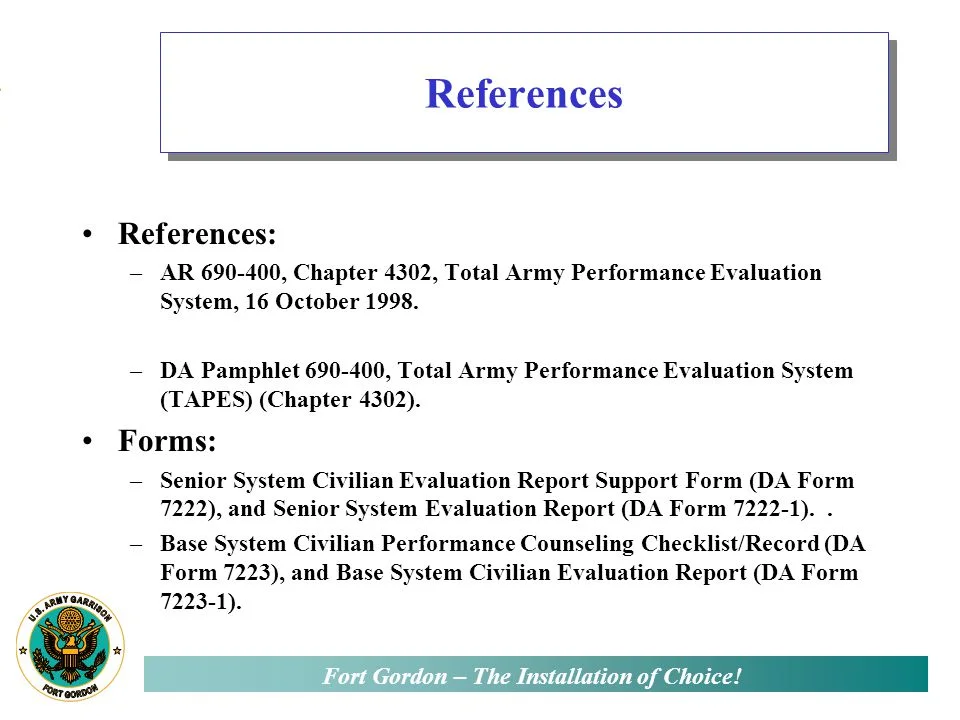
Evaluation reports deserve special attention because they can affect career progression and selection boards. Soldiers reviewing evaluation history can also consult this Army performance evaluation guide for broader context on NCOER and OER records.
Compare iPERMS With Your Personal Checklist
Create a checklist based on your career milestones. Include each evaluation period, award, school, promotion, duty change, and separation-related event. Then compare the checklist against the files displayed in iPERMS.
The comparison should cover both recent and older records. A common mistake is checking only the latest evaluation or current assignment documents while overlooking an earlier NCOER, an award from a previous unit, or a school certificate needed for a promotion packet.
Use the following review approach to organize the comparison:
| Record area |
What to verify |
Common issue |
| Evaluations |
Correct report, period, signatures, and status |
Missing or rejected report |
| Awards |
Certificate, order, and award level |
Certificate uploaded without supporting order |
| Military education |
Course title, completion date, and certificate |
Illegible or incomplete certificate |
| Assignments and promotions |
Orders, effective dates, and rank |
Wrong document category |
| Separation records |
DD-214 and related supporting documents |
Missing final or corrected version |
| Personal data |
Name, identity details, and dates |
Mismatch or outdated information |
Keep copies of documents that are not visible in the system. Save them using clear filenames that include the document type and date. This makes future submissions easier and gives your servicing personnel office a precise explanation of what needs to be added or corrected.
Check Document Status and Indexing
A submitted file may not immediately appear as a finalized record. Depending on the document and processing path, it may be pending review, rejected, returned for correction, or indexed under an unexpected category. Read any available status or processing information before submitting the same item again.
Correct indexing matters because authorized reviewers often search by document type, date, or record category. An evaluation filed under an unrelated section may be overlooked even though it exists in the repository. Review the title, category, effective date, and other available metadata for each important document.
If a file is missing, incorrectly indexed, or rejected, follow the current Army correction or submission process. Your unit S-1, administrative office, servicing personnel support organization, or other authorized records official can identify the proper route. Keep the original file and any transmission evidence until the issue is resolved.
Resolve Gaps Through the Right Office
Begin with the office that created or maintains the document. An award may require help from the unit that approved it, while an evaluation issue may need attention from the rating chain, senior rater, or administrative records staff. Separation documents may require coordination with the appropriate transition or personnel office.
When reporting a problem, provide specific information: your full name, identifying details requested by the office, document type, relevant date, unit, and a clear description of the error. Attach a readable copy when permitted. Avoid sending sensitive personnel records through unapproved email or storage services.
Do not alter official documents yourself to fix a typo or missing page. Request a corrected document or an authorized update. Maintaining a record of submission dates, case numbers, emails, and responses can help establish a useful audit trail if the correction takes time.
Perform a Final Readiness Review
After a correction is processed, return to iPERMS and confirm that the updated file is present and accurate. Do not assume that submitting a document means the final version has been accepted. Check the actual record, including pages, indexing, dates, and document status.
A final review is especially important before a promotion board, command selection process, reenlistment action, retirement, or separation. Personnel may also benefit from reviewing the EES user guide when coordinating evaluation-related records and understanding related administrative workflows.
Protect your copies and review the record periodically, such as after an evaluation closes, an award is approved, a school is completed, or a reassignment ends. Frequent short reviews are easier than reconstructing several years of missing paperwork at once.
Use a Repeatable Records Checklist
A consistent process reduces overlooked documents and makes follow-up more efficient. Apply these steps during every iPERMS review:
- Gather personal copies of evaluations, awards, orders, certificates, and separation documents.
- Compare each item with the corresponding file in iPERMS.
- Verify identity information, dates, signatures, page order, readability, and indexing.
- Record missing, duplicated, rejected, or incorrectly categorized documents.
- Contact the responsible administrative office and retain proof of each correction request.
A complete iPERMS record supports accurate personnel decisions and gives you greater control over your Army career documentation. Review your files now, document every discrepancy, and begin the authorized correction process before an important deadline makes the missing record urgent.