Understanding NCOER Part II Rater Responsibilities
The NCOER Part II rater responsibilities section explains how a rating official observes, assesses and documents an NCO’s performance. It is more than an administrative block: it identifies the rater’s role in producing a fair, evidence-based evaluation.
For Australian readers supporting U.S. Army personnel, the terminology can seem unfamiliar. A rater may be a senior NCO in a unit at Fort Cavazos, a recruiting office in Sydney, or a deployed command environment where reporting relationships change quickly.
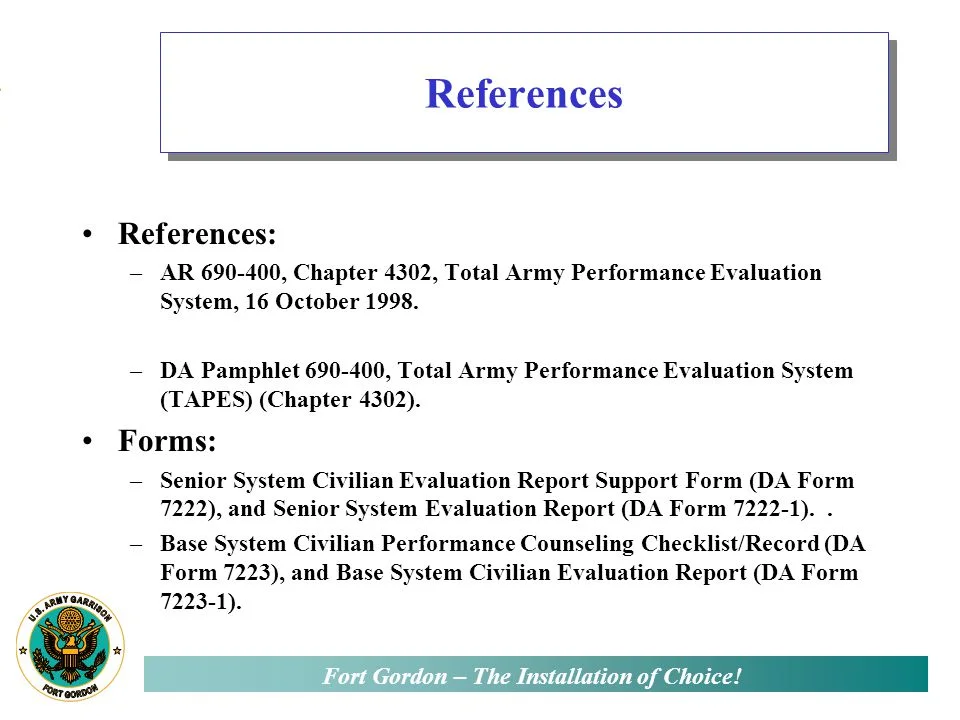
Part II should be read alongside the NCOER support form, duty description, counselling records and applicable Army guidance. The form records the official evaluation, while those supporting materials help establish what the NCO was expected to accomplish.
Because EES, iPERMS and evaluation rules can change, general explanations should be checked against current official instructions. The US Army category guides can help place the form within wider personnel and evaluation processes.
What Part II Establishes
Part II identifies the rater and confirms the relationship between the rater and the rated NCO. It normally includes the rater’s name, rank, duty position, organisation and signature details, along with the period during which the rater directly observed the soldier.
The central responsibility is direct evaluation. A rater should understand the NCO’s duties, set expectations, provide meaningful counselling and assess results against established standards. A person who barely worked with the NCO may lack the knowledge needed to write a credible report.
| Area |
Rater responsibility |
Useful evidence |
| Duty expectations |
Understand the NCO’s role and standards |
Duty description, support form |
| Observation |
Monitor conduct, performance and leadership |
Counselling notes, mission records |
| Feedback |
Explain strengths and required improvement |
Developmental counselling |
| Assessment |
Compare results with appropriate standards |
Achievements, reports, outcomes |
| Submission |
Complete and sign the report accurately |
Dates, profiles, administrative checks |
How Raters Build Fair Assessments
A sound evaluation begins early in the rating period. The rater should review the NCO’s goals, clarify priorities and record significant achievements or problems as they occur. Waiting until the final week often produces vague language and makes it harder to distinguish important events from routine duties.
Counselling is a continuing responsibility rather than a single meeting. In a large organisation such as a Brisbane-based defence contractor supporting U.S. personnel, regular digital notes may be useful, but sensitive records must still be stored and handled according to applicable military policy.
Raters should separate personal preference from performance. An NCO who uses a different leadership style may still exceed standards if the evidence shows reliable results, professional conduct and effective team development.
Performance Evidence That Holds Up
Strong evidence links an action to a measurable result. Examples might include improving inspection readiness, reducing processing delays, increasing qualification rates, mentoring junior soldiers or completing a complex mission without compromising safety.
The rater should consider the full rating period, including changes in duty position, temporary assignments and unusual operating conditions. A short period of exceptional work should not automatically overshadow months of ordinary performance, while a late failure should be assessed in proportion to its effect and context.
Useful evidence usually has four qualities:
- It identifies what the NCO did.
- It explains the scale or difficulty of the task.
- It shows the result for the team, unit or mission.
- It can be supported by records or knowledgeable witnesses.
Australian workplaces often use terms such as “performance review” and “professional development plan,” but an NCOER has a distinct Army purpose. Civilian-style praise without mission context may sound positive yet fail to explain the NCO’s actual contribution.
Handling Rater Profiles And Box Checks
Part II responsibilities connect closely with the rater’s overall assessment and senior-rater profile. The rater must assess the NCO against the correct grade and responsibilities, not simply compare the person with a favourite subordinate or the most recent performer.
A profile reflects how a rater has used performance categories across reports. It should never be manipulated to reward or penalise an individual. Raters need to understand current policy before making recommendations, particularly when evaluation forms, electronic workflows or promotion requirements have changed.
The Evaluation Entry System provides useful background for readers learning how evaluations move through preparation, review and submission. It should supplement, rather than replace, current Army instructions and local command guidance.
Writing The Narrative
Narrative comments should be specific, balanced and consistent with the selected performance assessments. Effective wording describes leadership behaviour, technical competence, accountability and results rather than relying on broad claims such as “outstanding NCO” without explanation.
The rater should also address development. A fair report can recognise strong performance while identifying a realistic area for improvement. Developmental language should be professional, supportable and relevant to future duties, schooling or increased responsibility.
Before signing, check that comments do not contradict the duty description, counselling history or assessment blocks. A report praising exceptional leadership but recording weak performance without explanation may create confusion for reviewing officials and promotion boards.
Common Administrative Traps
Administrative errors can weaken an otherwise accurate report. Incorrect rating dates, missing signatures, wrong duty titles and inconsistent rank information may cause the evaluation to be returned for correction or delay its filing in the soldier’s record.
Raters should also avoid treating the NCOER as a surprise document. If serious concerns appear for the first time in the final report, the NCO may reasonably question whether expectations and feedback were communicated during the period.
Frequent problems include:
- Copying old wording without checking the current duty position.
- Using achievements that belong to another rating period.
- Making claims that cannot be verified.
- Ignoring extended leave, reassignment or temporary duty.
- Writing inflated language that does not match the evidence.
For personnel moving between U.S. and Australian administrative environments, terminology can add risk. “Supervisor,” “rater,” “reviewing official” and “senior rater” are not interchangeable labels, so the actual Army reporting relationship must be confirmed.
Final Review Before Submission
A final review should confirm that Part II accurately identifies the rater, dates and duty relationship. The rater should read the complete form as a single document and check whether the duty description, achievements, assessments and narrative tell the same story.
The NCO should have the appropriate opportunity to review the evaluation and raise factual concerns through authorised channels. That does not mean the rater must accept every requested change; it means the process should be transparent and administratively sound.
Keep supporting records according to unit policy, and verify where the approved report will be stored. Soldiers may later need the document for promotion, assignment, school selection or separation paperwork, including when managing records from Melbourne, Perth or another location far from the original unit.
Broader resources on military records and evaluation administration are available through administrative guidance, while current command, human resources and Army policy remain the controlling sources for official decisions.