How to Correct an Incomplete AER Claim
An incomplete Army Evaluation Report (AER) can affect a Soldier’s academic record, assignment history, professional development, and future administrative decisions. Missing course results, inaccurate dates, absent comments, or incomplete authentication can make the report difficult to understand and may require formal correction.
An AER is generally prepared on DA Form 1059 for a period of academic or military school training. The correction process depends on whether the problem is a simple administrative omission or a disputed evaluation of performance. Identifying that difference early helps you choose the right evidence and avoid unnecessary delays.
The process usually involves reviewing the report, gathering records, contacting the appropriate school or command officials, and submitting a clear correction or appeal request. Keep copies of every document and record the dates of your communications.
Identify What Is Missing
Begin by obtaining the exact AER version that appears in your official record. Compare it with course enrollment documents, graduation records, counseling statements, certificates, orders, and any copy provided when the report was completed. Check the Soldier’s name, rank, identification information, course title, beginning and ending dates, academic status, comments, signatures, and authentication dates.
An incomplete report may contain a blank field, an omitted course result, a missing signature, or an incorrect training period. It may also fail to include relevant information that was available before the report was signed. Write down each issue separately instead of describing the report as simply “wrong.”
A factual omission is usually easier to correct than disagreement with an evaluator’s judgment. If the concern involves performance comments or ratings, explain precisely which statement is inaccurate and what official evidence supports the requested change.
Separate an Administrative Error From a Dispute
Administrative corrections address verifiable facts. Examples include a misspelled name, wrong rank, incorrect course dates, missing academic status, or an omitted qualification. These issues can often be supported by documents that clearly establish the correct information.
A substantive appeal challenges the fairness, accuracy, or basis of the evaluation itself. That type of request normally requires a stronger explanation, such as evidence that the report contains material errors, was prepared contrary to applicable policy, or failed to reflect documented facts. Personal disagreement with an unfavorable result may not be enough.
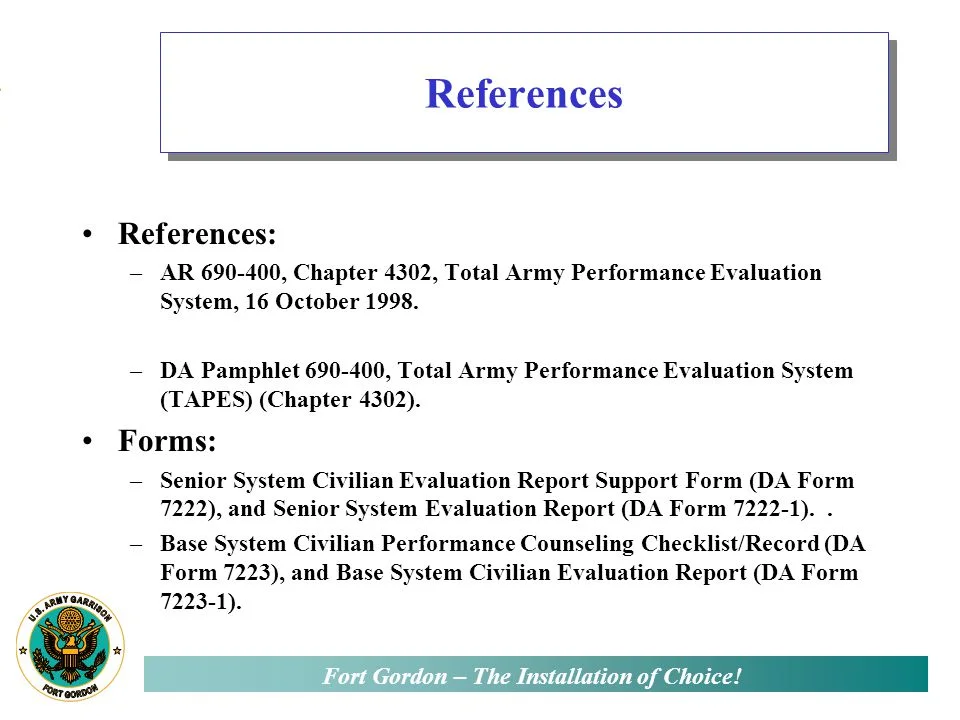
Army evaluation procedures can change, and the appropriate reviewing authority may depend on the type of AER, the school, and the time since completion. Review the current version of the applicable regulation and contact the servicing education office, S-1, or administrative support channel before submitting a formal request.
| Issue With the AER |
Useful Supporting Evidence |
Likely First Contact |
| Wrong name, rank, or dates |
Orders, personnel records, enrollment documents |
S-1 or school administration |
| Missing course result |
Grade report, certificate, academic transcript |
Course manager or registrar |
| Missing signature or authentication |
Original report, routing record, official correspondence |
Rating official or school command |
| Incorrect factual comment |
Counseling records, written feedback, official memoranda |
Report preparer and chain of command |
| Disputed performance assessment |
Contemporaneous records and a detailed appeal statement |
Command review or evaluation appeal channel |
Build a Focused Evidence Packet
Organize the packet in the same order as the issues listed in your request. Start with a short cover memorandum identifying the AER, the training period, and the specific correction sought. Follow it with the report being challenged and labeled attachments that prove each point.
Use official, dated records whenever possible. A certificate may establish course completion, while a transcript or grade report may clarify academic standing. Orders can verify dates and status, but they may not prove that a particular comment or rating was inaccurate. Match every requested change to evidence that directly supports it.
Avoid sending large collections of unrelated documents. A decision-maker should be able to understand the problem quickly. If the concern involves written performance comments, review guidance on producing a strong NCOER bullet for insight into the importance of specific, observable, and supportable language. The same principle applies when explaining why an AER statement is incomplete or misleading.
Request the Correction Through the Right Channel
Start with the office closest to the record, such as the course manager, registrar, education services office, or unit administrative section. Explain that you are requesting correction of an incomplete or inaccurate AER and ask whether the original report can be amended, reissued, or routed for formal review.
Use professional language and state the remedy clearly. For example, request that a missing course result be entered, a date be corrected, or an unsupported statement be reviewed. Do not ask officials to “fix everything” without identifying the precise fields or comments at issue.
If the local office cannot change the report, ask for written guidance on the next reviewing authority. Keep the name, title, email address, and response date for each contact. When administrative systems are involved, technical access can create another obstacle; these EES access troubleshooting steps may help distinguish a login problem from a record-correction issue.
Write a Clear Correction Statement
A good statement follows a simple pattern: identify the exact entry, explain why it is incomplete or inaccurate, cite the supporting document, and state the correction requested. Keep the tone factual and avoid arguments about personality, intent, or personal frustration.
For example, a request might explain that the AER lists the wrong course completion date, attach the official graduation certificate, and ask that the date be changed to match the school record. If the report omits an academic result, identify the result and attach the transcript or grade report that verifies it.
If the issue is a substantive evaluation dispute, describe when the relevant event occurred and why the evaluator’s statement conflicts with contemporaneous evidence. Do not create new explanations after the fact unless you clearly identify them as later-discovered information. A concise timeline can help show what records existed before the report was completed.
Protect the Record After Submission
Before sending the packet, verify that every attachment opens, every page is legible, and sensitive information is transmitted through an approved channel. Save the final submission as a single PDF when permitted, while retaining the original files separately. Never alter the original AER; preserve it as evidence of what currently appears in the record.
After submission, request acknowledgment and ask how the decision will be documented. If the report is corrected, obtain a copy of the amended or replacement document and confirm that the updated version reaches the appropriate personnel record system. A correction at the school level may not automatically update every downstream record.
Use this checklist before submitting an incomplete AER claim:
- Obtain the exact AER version currently filed in the record.
- List each missing, inaccurate, or disputed entry separately.
- Match every requested correction with official supporting evidence.
- Identify the correct school, command, S-1, or appeal authority.
- Keep copies of the request, attachments, delivery proof, and responses.
A correction request should be specific enough that an unfamiliar reviewer can understand the issue without conducting additional research. If the request is denied, read the explanation carefully and determine whether the next step is clarification, resubmission with stronger evidence, or a formal appeal under the current Army policy.
Act promptly, preserve the original record, and use official channels to request review. A well-organized packet gives the reviewing authority a clear basis to correct missing information and helps ensure the final AER accurately reflects the Soldier’s training history and performance.